West/Southwest Industrial Areas Foundation organizations are actively working at federal, state and local levels so that immigrant families can participate more fully in public life.
In addition to responding to the humanitarian crisis at the border, local affiliates are bringing native- and foreign-born constituents into conversation around the theology (and economics) of immigration, educating recent newcomers with financial and 'Know Your Rights' civic academies, supporting policies which protect families and working to defeat those that would unfairly penalize undocumented immigrants for their status.
In California, affiliates have expanded access to public healthcare for immigrants, changed vehicle impoundment laws in urban municipalities and equipped thousands of individuals with government sanctioned photo-ID cards; In Arizona, organizations secured in-state tuition for DACA students in local community colleges; affiliates in Iowa have led voter education initiatives on the fiscal and economic impacts of immigration; and organizations in Texas have launched parish ID cards that are providing thousands of immigrants with alternative means of proving their identity to the police.
All immigration initiatives are rooted in the faith and democratic teachings of member institutions and seek to connect leaders across racial, ethnic and language lines.

'Recognizing the Stranger' is a new multi-year regional approach to immigration, working with local parishes to identify, train, and mentor immigrant leaders to build connections among themselves and with nonimmigrant allies in their parishes and the broader community. It is a collaborative effort among clergy, leaders, and organizers to develop capacity to tackle tough issues. With support from CCHD, the strategy has expanded from 7 to19 dioceses across the West and Southwest US.
According to CCHD Director Ralph McCloud, "Recognizing the Stranger is particularly successful because it captures the connections between what happens at Mass on Sunday morning, how families live their lives throughout the week, and how parishioners interact with members of the broader community. I have been impressed that participants seek true change. In the process, parishes are strengthened, unified, and revitalized."
Recognizing the Stranger, National Strategic Grant, CCHD
Program Trains Leaders to Put Faith into Action, Texas Catholic - Dallas
Immigrant Leaders Being Trained, Catholic Sentinel - Portland [pdf]
Milestones: Catholic Campaign, TMO Offers Leadership Training for Hispanic Parishioners, Texas Catholic Herald
THE LATEST
Oct 07, 2026
Leaders Testify and City Responds with a Lawsuit

With San Antonio ranking fourth in migrant deportations — and after hearing hundreds stories from immigrants and witnesses to the disappearances of fellow parishioners — COPS/Metro proposed to US Congressman Joaquin Castro a public field hearing on ICE practices, to document the impact of deportations and detention practices on the local community. Congressman Castro agreed and San Antonio’s first public field hearing was organized.
Close to 200 COPS/Metro leaders crowded into a library conference room for the field hearing. They were joined by TX State Senators Jose Menendez, Roland Gutierrez, TX Representative Barbara Gervin-Hawkins, and San Antonio City Councilwoman Phyllis Viagran, along with other local elected officials.
COPS/Metro leader and pastor of St. Margaret Mary Catholic Church, Fr. Jimmy Drennan, testified about Kimberly, who, 8 months into her fourth pregnancy, faced ICE agents who stormed into her home without an arrest warrant and removed her husband. He was moved from detention center to another -- the locations of which were not always known to his family -- before being deported. Kimberly was left on her own to work day and night to support her four children, all under the age of 10. Fr. Drennan also shared stories of American citizens profiled and detained, and desperation driving detainees to drink water out of toilets.
Allies from the Texas Immigration Law Council detailed instances of rape and sexual assault, where access to lawyers has been extraordinarily limited and official information about detainees effectively nonexistent. TILC Director Kristen Etter declared privately-run detention centers "essentially black sites" in practice.
Within hours of public testimony, San Antonio Mayor Gina Ortiz Jones announced a lawsuit. Bexar County officials pledged to do the same.
Sep 30, 2026

[Excerpts]
Valley Interfaith, a broad-based regional coalition of congregations, schools, and civic organizations across the Rio Grande Valley, will hold a major nonpartisan Accountability Session next month to seek public policy commitments from congressional, state, and county candidates ahead of the upcoming general election....
Sep 28, 2026

More than 300 leaders from 30 institutions across Oklahoma City and Tulsa came together for VOICE and ACTION's Statewide Accountability Session for Public Education. They brought their stories and an agenda for action: improving school transportation, supporting teachers, expanding mental and behavioral health services, and ensuring that all children, regardless of immigration status, know they have a right to a quality public education.
Sep 21, 2026

500 leaders from 30 faith, education, and community institutions gathered on September 20 to raise the most pressing issues facing their families and to secure commitments for concrete action from candidates for public office. Both state legislative candidates present pledged their support for OTOC’s agenda, and candidates for governor, U.S. Senate and U.S. House committed in writing to meet with OTOC within their first 100 days of office if elected.
Sep 17, 2026

Valley Interfaith Project (VIP) held a press conference with Congresswoman Yasmin Ansari following a surprise oversight visit to the ICE Holding Facility in Phoenix, demanding accountability for immoral conditions facing detainees, overridden holding times and capacity limits, and how immigration enforcement is harming people in their own pews.
Sep 09, 2026
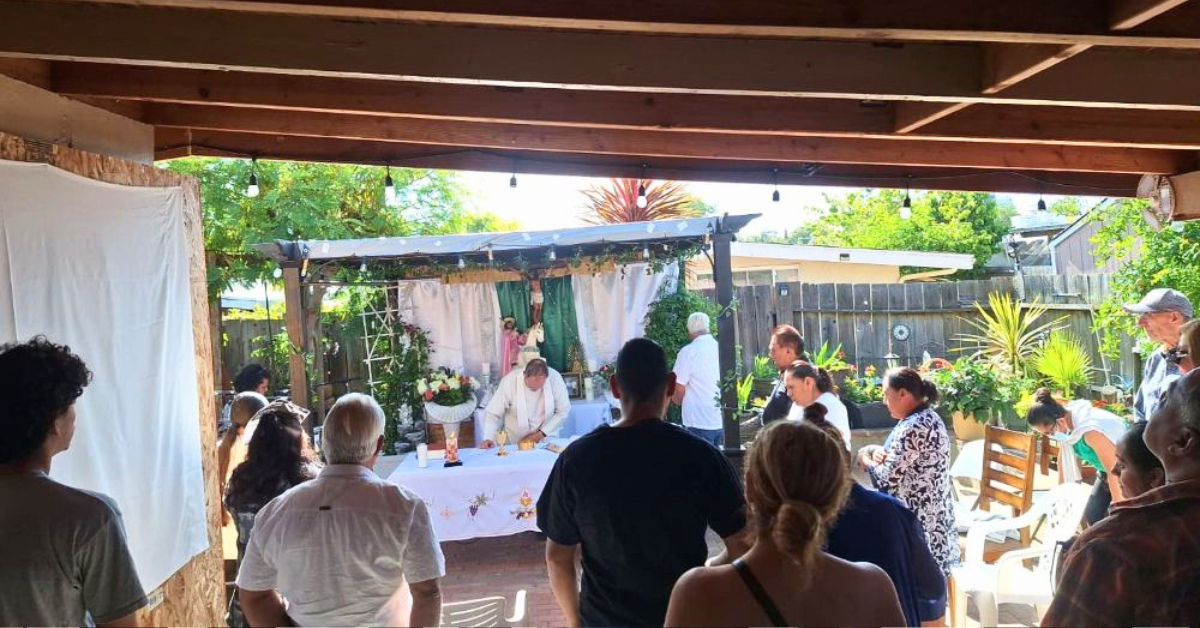
[Excerpts]
One Saturday a month, in a central Silicon Valley neighborhood, residents stop to read handmade signs taped to poles: "Misa del Barrio. ¡Todos son bienvenidos! Neighborhood Catholic Mass. You are very welcome."
These posters advertise outdoor pop-up Masses, known as Misas del Barrio, which pair the liturgy with community listening sessions….
The Misas, which existed before the COVID-19 pandemic, relaunched following the tragic death of an 8-year-old in 2022, which brought community concerns to city leaders through an organized March for Safety [by Silicon Valley Allied for the Common Good (SVACG)] ...Successful neighborhood improvements so far include the installation of crosswalks, streetlights, stop signs, renter protections and assistance for low-income essential workers.
Aug 13, 2026
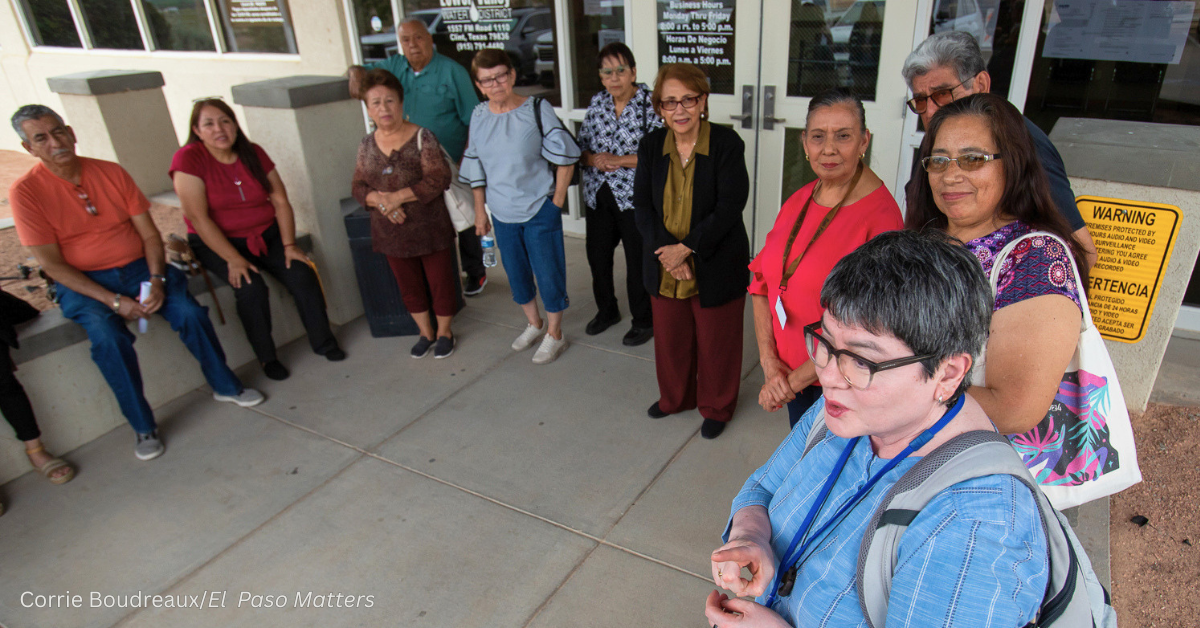
After extensive organizing by EPISO to block the largest planned ICE detention center in the nation, the Trump administration is now abandoning its proposal – a major victory for leaders who’ve fought for decades to protect local water and the dignity of their neighbors.
Aug 06, 2026

"Who is My Neighbor?" Civic Academy Leadership Team
Advancing a future based on truth and the dignity of their neighbors, VOICE gathered over 250 leaders for a civic academy — busting myths about immigrants, and preparing to turn what they learned into direct support for families who need it.
Jul 27, 2026

The Rev. Loyd Divinagracia encouraging parishioners with EPISO after meeting with Lower Valley Water District Board in Socorro, Texas
In their town of 30,000, EPISO leaders from Socorro, TX learned that ICE bought three warehouses for $123M to create one of the largest immigrant detention centers in the country, threatening to detain 8,500 people. Refusing to accept this, they organized hundreds of residents, ultimately scaling back detention center plans and postponing the construction start date.
Jul 21, 2026

[Excerpt from Houston Chronicle Op-Ed by TMO leaders Bishop John Ogletree, Jr. and Rabbi David Lyon]
Lorenzo Salgado Araujo left home Tuesday before dawn to spend another day building homes for future Houstonians. Instead, during what U.S. Immigration and Customs Enforcement described as a “targeted enforcement action” on Houston’s east side, the 35-year Houston resident and small business owner was killed.
We are Houston faith leaders, and our congregations belong to The Metropolitan Organization, a nonpartisan group that seeks the justice that so many of our faith traditions demand. We mourn Salgado’s death. And we demand an independent investigation into the enforcement strategy that led to it.
