
Click here for West/Southwest IAF Key Victories in 2024
AMOS Works to Broaden Language Access to Election Materials in Iowa

[Excerpts]
...In Iowa, it’s illegal for the state to translate official government forms. including anything election-related. This makes it really hard for non-fluent English speakers in Iowa to gather official voting information.
Iowa’s "English-only" law, as it is known by some, dates back to 1918 after World War I. Republican Gov. William Harding signed the Babel Proclamation into law, which made English the only language legally permitted in the state. It was intended to limit the German language in schools and other public spaces.
Tun said this law scares her community. She said sometimes they are too afraid to vote. They are worried they will get in trouble if they make a mistake in the voting process.
But people who translate the forms disagree. Jan Flora and Terry Potter of A Mid-Iowa Organizing Strategy (AMOS) said it is especially true this year. Flora translates voter forms into Spanish and Potter distributes them to other organizations throughout the state.
“If we cannot translate that, maybe we’re going to lose our voters…Yea, a lot of voters," Tun said.
She said the state has a responsibility to Iowans, whether they speak Spanish, Burmese, Karen or anything else.
[Photo Credit: Tiffany Tertipes, Unsplash]
Lost In Translation: How Iowa's 'English-Only' Law Affects Some Voters , Iowa Public Radio [pdf]

September 16, 2020
WTOS Creates -- and Secures City Funds for -- Mental Health

[Excerpts]
Due to the stress and anxiety brought on by the pandemic, leaders from the West Texas Organizing Strategy (WTOS) decided to start a program to support mental health.
WTOS asked a variety of members within the Lubbock community how Covid-19 had impacted their family, and the most common answer was mental health. As a result, the grant came from the city’s Covid-19 relief funds.
Catholic Charities has collaborated with WTOS to help bring awareness to the program.
“Catholic Charities has actually been called in to administer the program. So, it’s just been really great to have that approved and ready to go,” said Catholic Charities Executive Director Cynthia Quintanilla. “And we’re just excited about being able to provide the services.”
The program will kick-off Tuesday, September 15, and those interested in signing up for the session can get more information by visiting the Catholic Charities website.
Catholic Charities Receives Grant for New Mental Health Program, Everything Lubbock [pdf]
September 14, 2020
TMO Justice Summit Reiterates Call for Police Reform in Houston and Texas

[Excerpts]
Pastor John D. Ogletree reflected Thursday evening that it had been a sad day in Houston, and a somber one. Four city police officers were fired that day for their roles in the April 21 death of Nicolas Chavez, in an incident captured on police video that was finally made public after months of calls, from activists, to “release the tapes.”
But as Ogletree noted Thursday evening, at the beginning of an online summit on justice coordinated by The Metropolitan Organization of Houston and the Network of Texas IAF Organizations, Chavez’ death wasn’t an isolated incident.
“Chavez was the first of six killed by HPD officers during a two-month stretch, April and May,” Ogletree said. “All of these were men of color who were killed....”
“The cry now across the nation is for justice,” Ogletree continued. “Since May, there has been a heightened sense of rage, desperation, and resolve to shift the way policing is done in America.”
That’s certainly true, and it’s the best reason to feel optimistic about the prospects for police reform in Houston, at least....
[Photo Credit: Pastor John Ogletree of First Metropolitan Church]
Grieder: Push for Police Reform Shouldn’t be Scuttled in Favor of Partisan Politics, Houston Chronicle [pdf]
TMO Police Reform Action Agenda
September 13, 2020
Under Trump, as Election Approaches, Almost 235,000 Fewer New Citizens Will be Sworn in This Fiscal Year

[Excerpt]
Margarita Juarez, originally from Mexico, became a U.S. citizen last year — and brought about a dozen family members and friends to her ceremony. Her celebrators even included her pastor and a volunteer with Dallas Area Interfaith, a nonpartisan group that pushes citizenship campaigns.
“It is so sad that people can’t participate in a ceremony that is so beautiful,” Juarez said of the pandemic restrictions on ceremonies.
She will vote for the first time Nov. 3. She says she is letting her faith in God assist with her election decision.
[Photo Credit: Ryan Michalesko/Dallas Morning News]
Under Trump, As Election Approaches, Almost 235,000 Fewer New Citizens Will Be Sworn In This Fiscal Year, Dallas Morning News [pdf]
September 13, 2020
San Antonio Report Reframes COPS/Metro Ballot Initiative as Opportunity to Celebrate Labor Day in November

[Excerpt]
About five years ago, COPS/Metro sought and won “living wage” minimum pay for City workers, resulting in raises for about 20 percent of the civilian workforce. They won similar measures from Bexar County, and some school districts followed suit.
Now two measures on the Nov. 3 ballot offer San Antonians the opportunity to again help lower-rung workers. Both involve a one-eighth-cent sales tax that for 20 years has provided funding to buy development rights to protect sensitive lands over the Edwards Aquifer recharge zone.
The first ballot measure would transfer those funds to provide about $154 million over the next four years for a job training program projected to boost the incomes of up to 40,000 workers. That’s an aggressive goal, but what gives it credibility is that its approach is based on Project Quest, a jobs training program designed by COPS/Metro 28 years ago.
Interestingly, it was COPS/Metro and their sister organizations around the state that persuaded the Legislature back in 2001 to authorize local governments to spend money on job training and early childhood education. That same law, the Texas Better Jobs Act, permitted San Antonio voters to approve Pre-K 4 SA in November 2012. The highly successful preschool program is up for renewal on the ballot.
[Photo Credit: Scott Ball, San Antonio Report]
Election Day Ballot Will Let You Celebrate Labor Day on November 3rd, San Antonio Report [pdf]
September 08, 2020
Arizona Interfaith Calls on Dept. of Corrections to Mitigate Spread of COVID-19 in Prisons
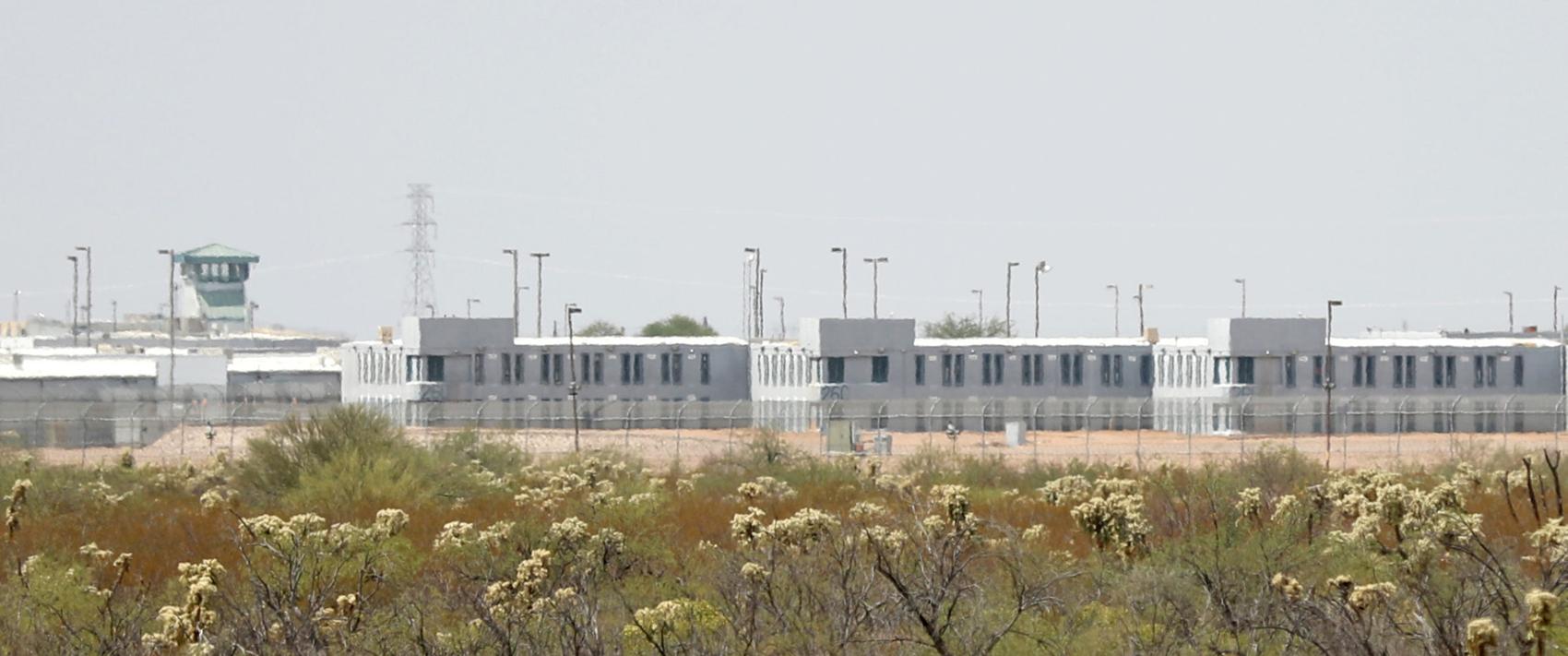
A late-July spike in Pima County COVID-19 cases shown on the Arizona Department of Health COVID-19 webpage shows ... 642 cases, the highest number of cases by far that month.
On July 2, Barbara Hudson died in the San Carlos Unit in Perryville Women’s Prison in Goodyear. Before her death, she sought medical care for shortness of breath and chest pain, said Kim Crecca, convenor of the Diocesan Prison Ministry, who has volunteered at Perryville and communicates often with prisoners.
Crecca is part of the Arizona Interfaith Network, a group of faith-based leaders across the state that organizes people for social and economic improvement.
“We feel that her death is a rallying cry, not only to help with the release of inmates as possible but also about the underlying conditions there that make them really vulnerable to the virus,” Crecca said.
“It was alarming very early on in our conversations with the state about how they were not addressing the asymptomatic nature of the virus,” said Joe Rubio, lead organizer of the Arizona Interfaith Network.
The faith groups started meeting with Department of Corrections Director David Shinn in April and less often with Dr. Cara Christ, Arizona Department of Health Services director, to discuss what the state could do to better protect inmates from the virus.
“No one who is incarcerated should have a death sentence by virus, but particularly those who are incarcerated for low-level offenses,” [Episcopal Bishop Jennifer] Reddall said. “They should not be put in a place where they’re going to die because of some infraction."
[Photo Credit: ]
Tucson Prison Inmates Say Close Conditions, Slow Test Results Spread COVID-19, Arizona Daily Star [pdf]
September 01, 2020
AMOS Secures $5 Million in New Funding for Longterm Workforce Development in Iowa
 At the urging of AMOS leaders, Governor Reynolds is investing $5 million for job training paired with wrap-around services from CARES Act funds.
After hearing stories from Iowans facing the stress of unemployment amidst a shifting economic environment, AMOS (A Mid-Iowa Organizing Strategy) began researching how to help workers get back to work in living wage jobs.
"Losing a job is a trauma for workers and their families," said AMOS leader Rev. Dr. Benjamin Bell Jr. "We know that workers need not only training to be able to access higher-wage work, but also support for that trauma, childcare access and assistance to help them complete a training program and be ready to re-enter the workforce."
Since May, AMOS leaders had been meeting with business, government, and community stakeholders to formulate a job training proposal to address the coronavirus crisis. In July, 100 AMOS leaders convened a Workforce Summit calling on Governor Reynolds to invest in intensively supported job training which was built on a model pioneered by the West / Southwest IAF. This initiative will ensure workers have the training and support they need to get back to work, strengthening their families and better able to support the communities they live in.
Governor Reynolds Heeds AMOS' Call to Invest in Iowa's Workforce, AMOS [pdf]
August 27, 2020
Common Ground Wins $4 Million in Rental Assistance for Solano County, CA Tenants
On June 16, Common Ground held a civic academy with over 80 leaders, who learned together about strategies to strengthen testing, tracing, and supportive isolation efforts to contain COVID-19. In the research leading up to their academy, they learned that the county would receive $46.5 million in CARES Act funding throughout the state.
When leaders approached county officials about how these funds would be spent, they were met with surprise — no one seemed to know about the funds.
Common Ground leaders immediately initiated meetings with state legislators, county supervisors, and other officials. They organized house meetings and developed a budget of investments needed to support the needs of Solano county families and workers — including funding for TTSI as well as funds for rental assistance and a promotores outreach program to Spanish-speaking families.
When the budget passed, thanks to the urging of Common Ground leaders, it included double the original proposed amount for rental assistance.
August 27, 2020
Coloradans for the Common Good Raises Alarm on Lack of Student Access to Reliable Internet

[Excerpt]
A family in the San Luis Valley has made an X in masking tape on the kitchen counter. It’s the only place a remote hotspot works so the children can access remote school lessons. A mother who runs a hair salon in Commerce City brings her daughter to work with her. It’s the only place she can access online learning using her mother’s hotspot. But it means the mother has problems running credit cards at the same time. A third of students in the South Routt School district south of Steamboat Springs don’t have internet access. Teachers, parents and school superintendents told these stories during the Internet Access Summit Wednesday calling for affordable and universal internet, faster download and upload speeds and higher data caps, and training to ensure families can access quality connections.
The virtual summit, sponsored by Coloradans for the Common Good, a coalition of education, labor and faith-based groups, included teachers, school officials, elected officials, and representatives of internet service providers Comcast, Verizon and T-Mobile. “It’s frustrating,” said Toby Melster, superintendent of the Centennial School District in San Luis, Colorado. He estimates about 30 percent of his students are falling behind simply because they don’t have a high-quality internet connection. He said companies have donated some hotspots but because there are multiple people in a family who need to go online, “they’ve got to make a decision about who gets access to the hotspot...”
As Colorado Schools Reopen, Thousands of Students Still Don't Have Reliable Internet, Colorado Public Radio [pdf]
August 26, 2020
Mountain Voices Project Launches Regional Landlord-Tenant Assistance Program

[Excerpts]
...during the early portion of an Aug. 11 meeting of Pitkin County commissioners... representatives of the Mountain Voices Project — a consortium of more than 25 nonprofits, faith-based organizations and other entities in the Roaring Fork Valley — sought financial support for a new “landlord-tenant recovery fund” designed to assist low-income families struggling to make ends meet amid the economic crisis caused by the COVID-19 pandemic.
Lindsay Lofaro, executive director of The Buddy Program in Aspen, was one of several speakers advocating for Pitkin County’s support of the fund. She got involved in facilitating the discussion, she said, because her nonprofit mentoring organization is a member of Mountain Voices Project (also known as MVP) — and also because of her familiarity with Pitkin County officials and local fundraising sources.
According to information provided by MVP, the overall request is for $1 million to get the program started this year...
The general plan calls for families to receive three months of rental assistance. MVP will supply one-third of the payments to landlords. The families themselves will pay one-third. The balance would be foregone by the landlords themselves, should they agree to participate. The Uncle Bob Foundation, a nonprofit arm of the Garfield County Housing Authority, will serve as fiscal agent for the fund.
[Photo Credit: Andre Salvail, Aspen Daily News]
Help On The Way: Valleywide Relief Project Aims to Avert Evictions During Uncertain Times, Aspen Daily News [pdf]
August 23, 2020